
Introduction: The Silent Addiction Growing Inside Every Home Most parents today are not worried when their child spends hours on a mobile phone or tablet. In fact, many see it

Introduction: Two Generations, One Growing Distance
In many Indian homes, grandparents and grandchildren live under the same roof, yet often exist in completely different worlds. While grandparents carry stories, wisdom, and life experiences, children are increasingly absorbed in screens, fast-paced content, and modern habits. This creates a silent gap where interaction becomes limited, and meaningful bonding starts to fade.
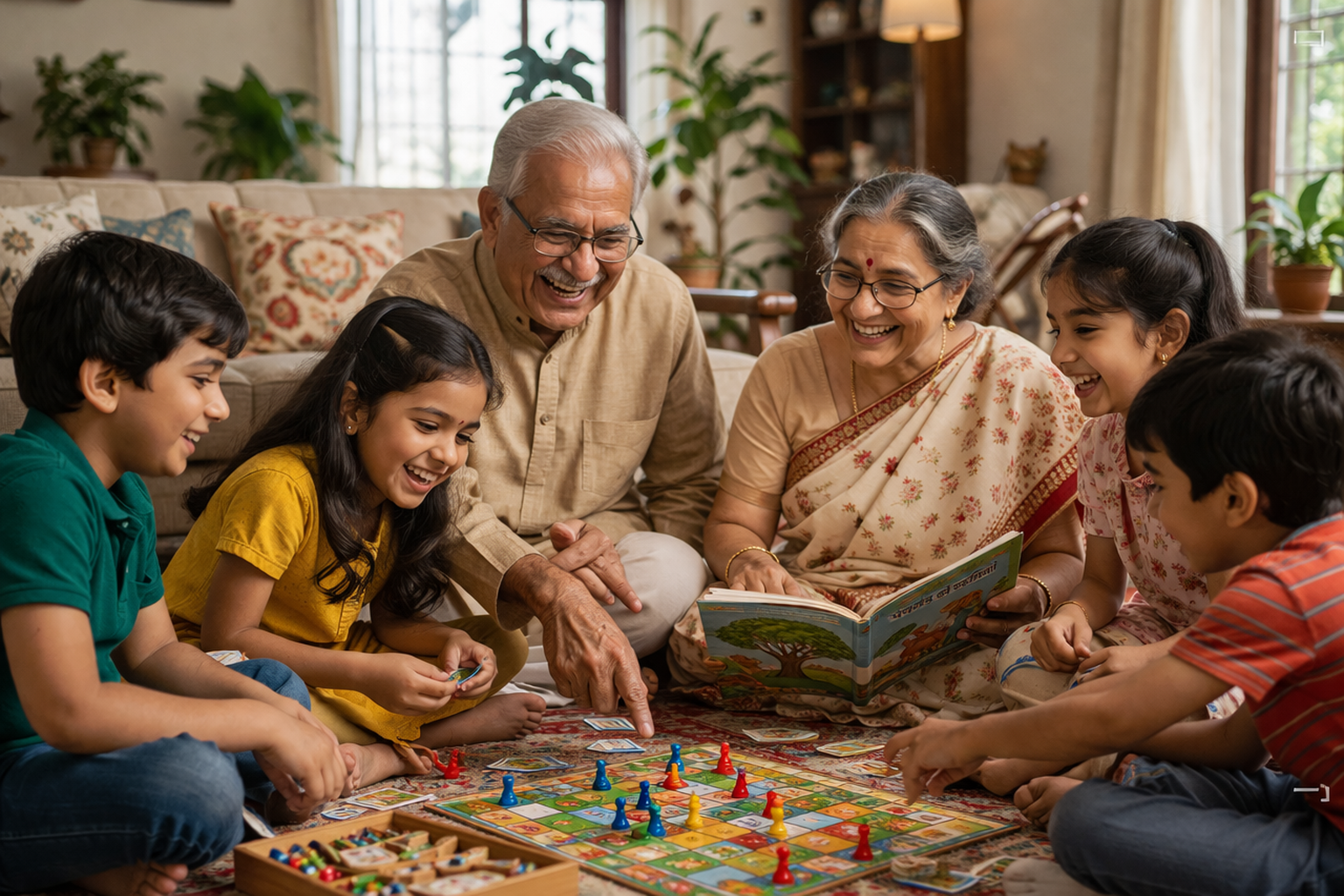
This gap is not due to lack of love, but due to lack of shared experiences. When generations do not engage in common activities, communication naturally reduces. The challenge today is not bringing them together physically, but connecting them emotionally. One of the most effective ways to do this is through play—simple, engaging, and interactive.
Why This Matters:
- Emotional bonding between generations is weakening
- Children are spending more time with screens than family
- Grandparents often feel disconnected
- Shared activities can rebuild relationships
- Play creates a natural bridge between generations
Why the Generational Gap is Increasing Today
The pace of life has changed dramatically over the last few decades. Grandparents grew up in an environment where learning and entertainment were largely physical and social. In contrast, today’s children are exposed to digital devices from an early age. This difference in upbringing creates a disconnect in communication styles, interests, and daily habits.
As a result, conversations become limited and interactions feel forced. Grandparents may struggle to understand modern technology, while children may not relate to traditional activities. Without a common ground, the gap continues to widen.
Key Reasons:
- Digital vs non-digital upbringing
- Different communication styles
- Reduced shared activities
- Time spent on individual screens
- Lack of structured interaction
Why Play is the Most Natural Bridge Between Generations
Play is one of the few activities that transcends age. It does not require advanced technology, complex language, or generational alignment. When people play together, they naturally interact, communicate, and connect. It creates an environment where both generations can participate equally.
For children, play is a way to learn and explore. For grandparents, it is a way to engage and share experiences. This mutual involvement makes play a powerful tool for building relationships.
How Play Helps:
- Encourages natural communication
- Creates shared experiences
- Builds emotional connection
- Reduces generational differences
- Makes interaction enjoyable
The Role of Grandparents in Child Development
Grandparents play a unique role in a child’s life. They bring patience, storytelling ability, and life lessons that parents often do not have time to share. Their presence provides emotional stability and a sense of belonging for children.
However, this role becomes limited when interaction is reduced. By actively engaging through play, grandparents can contribute significantly to a child’s cognitive and emotional development.
Contributions of Grandparents:
- Sharing stories and values
- Providing emotional support
- Teaching patience and discipline
- Encouraging curiosity
- Strengthening family bonds
Why Screens Are Replacing Family Interaction
Screens have become the easiest way to keep children occupied. While they offer convenience, they also reduce opportunities for real interaction. When children spend most of their time on devices, they miss out on meaningful conversations and shared experiences with family members.
This shift affects both generations. Children become less communicative, and grandparents feel excluded. Over time, this reduces emotional connection within the family.
Impact of Screen Dependency:
- Reduced face-to-face communication
- Limited emotional bonding
- Decreased attention span
- Isolation within the same household
- Weakening of family relationships
How Structured Play Creates Meaningful Engagement
Unstructured play may not always bring generations together, especially when interests differ. Structured play, on the other hand, provides a common activity with clear engagement. It allows both grandparents and children to participate without confusion or imbalance.
Structured activities are designed to be engaging, simple, and purposeful. They create a shared experience that naturally encourages interaction and collaboration.
Benefits of Structured Play:
- Easy for all age groups to participate
- Encourages teamwork and cooperation
- Builds cognitive and social skills
- Reduces dependency on screens
- Creates consistent bonding time
Activities That Work Across Generations
Not every activity can effectively bridge the generational gap. The best activities are those that are simple, interactive, and require participation from both sides. These activities should allow grandparents to guide and children to explore.
Choosing the right type of engagement is essential for creating a meaningful connection.
Effective Activities:
- Puzzle-solving and logic games
- Storytelling combined with activities
- Pattern and matching games
- Memory-based challenges
- Hands-on learning kits
Emotional Benefits of Intergenerational Play
When grandparents and grandchildren engage in activities together, the benefits go beyond learning. Emotional connections become stronger, and both generations experience a sense of belonging and joy.
For grandparents, it reduces feelings of isolation and increases engagement. For children, it provides security, attention, and emotional support. This mutual benefit strengthens the overall family environment.
Emotional Outcomes:
- Increased happiness and bonding
- Reduced loneliness among elders
- Improved confidence in children
- Stronger family relationships
- Better emotional stability
What Smart Families Are Doing Differently
Families who recognize the importance of intergenerational bonding are making conscious efforts to create shared experiences. They are not relying on chance interactions but are intentionally introducing activities that bring everyone together.
This approach ensures that bonding becomes a regular part of daily life rather than an occasional event.
Practical Approaches:
- Setting fixed time for family activities
- Introducing structured play sessions
- Reducing unnecessary screen usage
- Encouraging participation from both generations
- Creating a routine for shared engagement
The Role of Hands-On Learning Tools in Bridging the Gap
Hands-on learning tools are particularly effective because they combine simplicity with engagement. They do not require technical knowledge, making them accessible for grandparents, while still being interesting for children.
These tools create a balanced environment where both generations can contribute and learn together. They transform play into a meaningful activity that supports bonding and development.
Why They Work:
- Easy to understand and use
- Engaging for both children and elders
- Encourage interaction and collaboration
- Build cognitive and social skills
- Provide structured engagement
Frequently Asked Questions About Intergenerational Play
How can grandparents bond with grandchildren in today’s digital world?
By engaging in shared activities like puzzles, storytelling, and hands-on games. These create natural interaction and reduce dependence on screens.
What activities are suitable for both generations?
Simple logic games, memory activities, and structured play tools work well. They allow both grandparents and children to participate comfortably.
How often should such activities be done?
Daily or regular short sessions are effective. Consistency helps build stronger relationships over time.
Does play really improve family bonding?
Yes, shared activities create emotional connection and improve communication. Play makes interaction natural and enjoyable.
Can this reduce screen time in children?
Yes, engaging alternatives naturally shift attention away from screens. Children prefer activities that involve interaction and fun.
Conclusion: Connection is Built Through Shared Experience
The generational gap is not an unavoidable problem—it is a result of changing lifestyles and habits. When families create opportunities for shared experiences, this gap can be reduced significantly. Play offers a simple yet powerful way to bring generations together.
By choosing the right activities and making them part of daily life, families can build stronger relationships, improve communication, and create lasting memories. The goal is not just to spend time together, but to engage meaningfully.
What You Should Do Next:
Make bonding a daily habit
Introduce shared activities at home
Reduce screen-based isolation
Encourage participation from grandparents
Choose structured, engaging tools