
Introduction: The Silent Addiction Growing Inside Every Home Most parents today are not worried when their child spends hours on a mobile phone or tablet. In fact, many see it

Introduction: Why Most Educational Products Fail Over Time
Parents often invest in educational toys and learning tools with the hope that they will benefit their child for years. However, most products lose relevance within months. Children outgrow them quickly, interest fades, and the product ends up unused. This creates a cycle of repeated purchases without long-term value.
The core issue is not the intention but the design. Most tools are created for a specific age or a narrow skill set. As the child grows, the tool becomes either too simple or irrelevant. What families actually need is something that evolves with the user and remains useful across different stages of life.
The Problem with Typical Educational Products:
- Limited age relevance
- Short engagement lifespan
- Single-skill focus
- Lack of scalability
- Repeated spending without long-term value
What Does “Buy It for Life” Mean in Learning Tools
The concept of “buy it for life” is usually associated with durable physical products, but it is equally relevant in education. A truly valuable learning tool should not just last physically but remain mentally engaging across years and even generations.
Such a tool adapts to different skill levels, offers increasing complexity, and continues to challenge the user. It becomes a part of the learning journey rather than a temporary solution.
Characteristics of a Lifetime Learning Tool:
- Multi-level difficulty
- Adaptability across age groups
- Long-term engagement
- Durable and reusable design
- Continuous skill development
Why One Kit Can Serve Three Generations
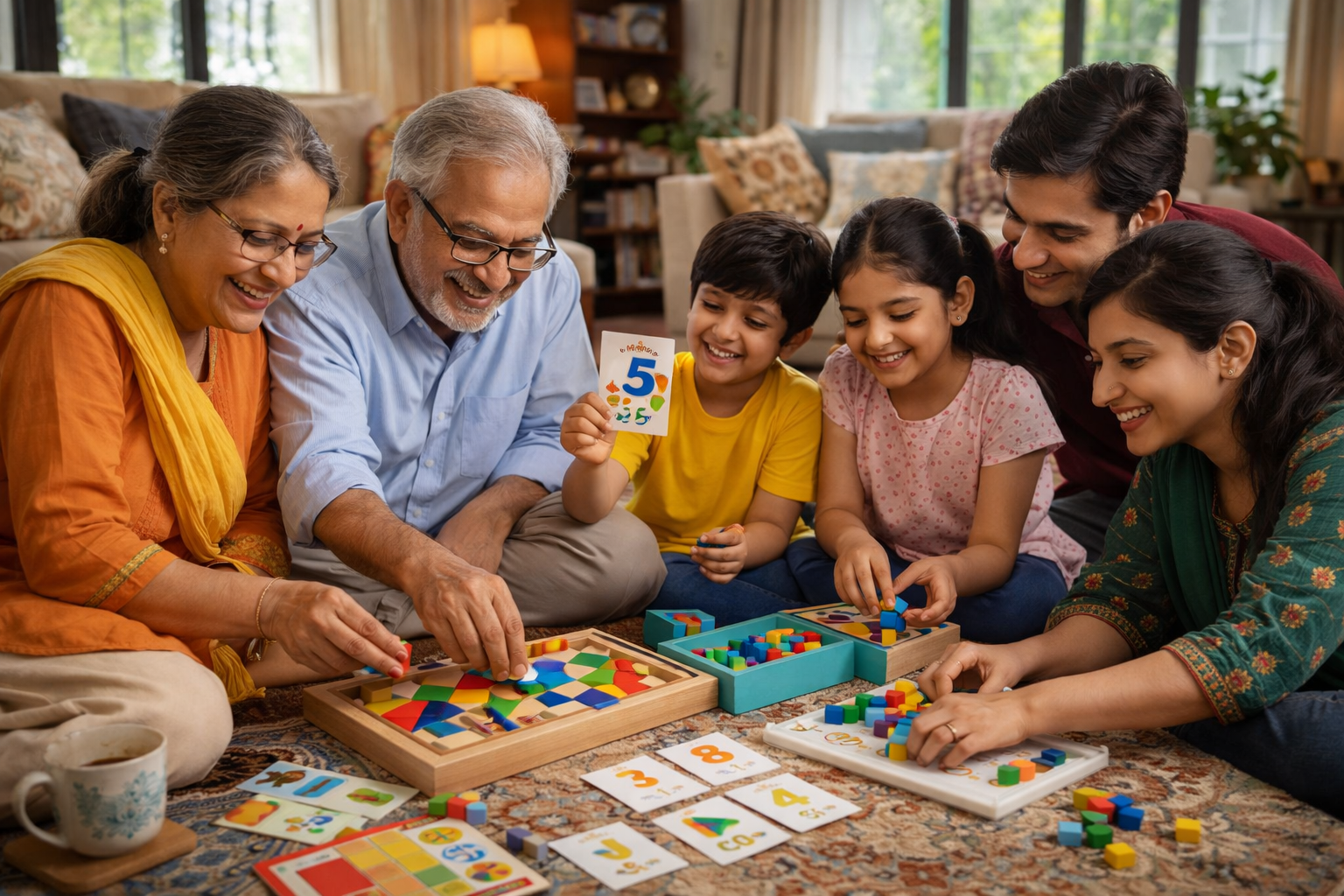
A well-designed educational kit is not limited by age. Its value lies in its ability to scale in complexity and application. What may start as a simple activity for a child can become a logic challenge for a teenager and a cognitive exercise for an adult or senior.
This multi-generational usability makes it unique. Instead of being replaced, the same kit evolves in how it is used. It becomes a shared tool that connects different age groups through learning and interaction.
Multi-Generational Usage:
- Young children use it for basic learning
- Teens use it for logic and problem-solving
- Adults use it for mental sharpness
- Seniors use it for cognitive engagement
- Families use it for bonding activities
The Psychology Behind Long-Term Engagement
For a product to remain relevant over time, it must continuously challenge the user without causing frustration. This balance is critical for maintaining engagement. If a tool is too easy, it becomes boring; if too difficult, it is abandoned.
A scalable learning system maintains this balance by offering progressive challenges. It keeps the brain engaged and motivated, ensuring that the user returns to it repeatedly.
What Drives Long-Term Use:
- Progressive difficulty levels
- Clear sense of achievement
- Continuous challenge
- Intrinsic motivation
- Variety in usage
Why Most Toys Entertain but Do Not Educate
Many products in the market are designed primarily for entertainment. They may keep children engaged temporarily but do not contribute to meaningful learning. These products lack structure and clear learning outcomes.
As a result, they fail to hold attention beyond a short period. True educational tools must combine engagement with purpose, ensuring that every interaction contributes to skill development.
Limitations of Entertainment-Based Products:
- No structured learning path
- Short attention span engagement
- Lack of measurable outcomes
- Limited cognitive development
- Quick loss of interest
How a Structured Kit Delivers Real Value
A structured educational kit is designed with a clear objective: to develop specific skills through guided interaction. It provides a framework that ensures consistent learning while still being engaging.
Unlike random toys, structured kits offer a systematic approach. They allow users to progress step by step, building confidence and competence over time.
Value Delivered:
- Clear learning progression
- Multi-skill development
- Consistent engagement
- Practical application of concepts
- Long-term usability
The Economic Advantage: One-Time Investment, Lifelong Returns
From a financial perspective, investing in a durable, multi-purpose learning tool is far more efficient than repeatedly buying short-term products. A single kit that remains relevant across years reduces overall spending while delivering greater value.
This approach also simplifies decision-making for parents. Instead of constantly searching for new products, they can rely on a single solution that adapts over time.
Cost Benefits:
- Reduced need for frequent purchases
- Long-term usability
- Better return on investment
- Less clutter from unused products
- Sustainable consumption
Strengthening Family Bonds Through Shared Learning
One of the most overlooked benefits of a multi-generational learning tool is its ability to bring families together. When a single kit can be used by children, parents, and grandparents, it creates opportunities for shared experiences.
These interactions go beyond learning. They build relationships, improve communication, and create lasting memories. The tool becomes a medium for connection, not just education.
Family Benefits:
- Shared activities across generations
- Improved communication
- Stronger emotional bonds
- Collaborative learning
- Quality time without screens
Why This Approach Aligns with Modern Education Principles
Modern education systems, including NEP 2020, emphasize experiential learning, skill development, and holistic growth. A multi-purpose, hands-on kit aligns perfectly with these principles.
It moves away from rote learning and focuses on understanding, application, and exploration. This makes it not just a product but a learning ecosystem.
Alignment with Modern Education:
- Focus on experiential learning
- Encouragement of problem-solving
- Development of critical thinking
- Integration of play and learning
- Support for lifelong learning
What Smart Families Are Choosing Today
Families who prioritize long-term value are shifting away from disposable products and moving toward sustainable, multi-functional solutions. They are looking for tools that offer both educational and emotional benefits.
This shift reflects a deeper understanding of what truly matters in learning—consistency, engagement, and adaptability.
Smart Choices Include:
- Investing in scalable learning tools
- Prioritizing quality over quantity
- Reducing screen dependency
- Encouraging hands-on engagement
- Focusing on long-term development
Frequently Asked Questions About Lifetime Learning Kits
Can one educational kit really be used by all age groups?
Yes, if the kit is designed with scalable difficulty and multiple use cases. Younger children can use it for basic concepts, while older users can explore advanced problem-solving. This adaptability allows the same kit to remain relevant across different stages of life.
Will children get bored using the same kit?
Not if the kit offers progressive challenges and varied activities. As children grow, their way of interacting with the kit changes, making it feel new again. This evolving engagement keeps interest alive over a longer period.
Is it better than buying multiple toys?
Yes, because a structured kit provides deeper learning and longer usability compared to short-term toys. Instead of frequent replacements, one well-designed kit can deliver consistent value and skill development over time.
Can it replace digital learning tools?
It does not completely replace digital tools but offers a more balanced and effective alternative. Hands-on engagement builds stronger cognitive skills, while reducing over-dependence on screens and passive consumption.
Is it worth the investment?
Yes, because it combines long-term educational value with cost efficiency. A single investment that serves multiple purposes and age groups often proves more beneficial than repeated spending on limited-use products.
Conclusion: A Smarter Way to Invest in Learning
The idea of a single educational tool serving multiple generations may seem unusual, but it reflects a smarter approach to learning and consumption. Instead of focusing on short-term engagement, it prioritizes long-term value and meaningful development.
A well-designed kit becomes more than a product—it becomes a part of the family’s learning journey. It grows with the user, adapts to changing needs, and continues to provide value over time.
What You Should Do Next:
- Evaluate current spending on short-term products
- Shift focus to long-term value
- Choose tools that grow with the user
- Encourage shared learning experiences
- Invest in solutions that support lifelong development