
Introduction: The Real Problem with How Our Children Learn Today Most Indian parents believe that if a child is not writing in a notebook or memorizing answers, they are not

Introduction: The Silent Addiction Growing Inside Every Home
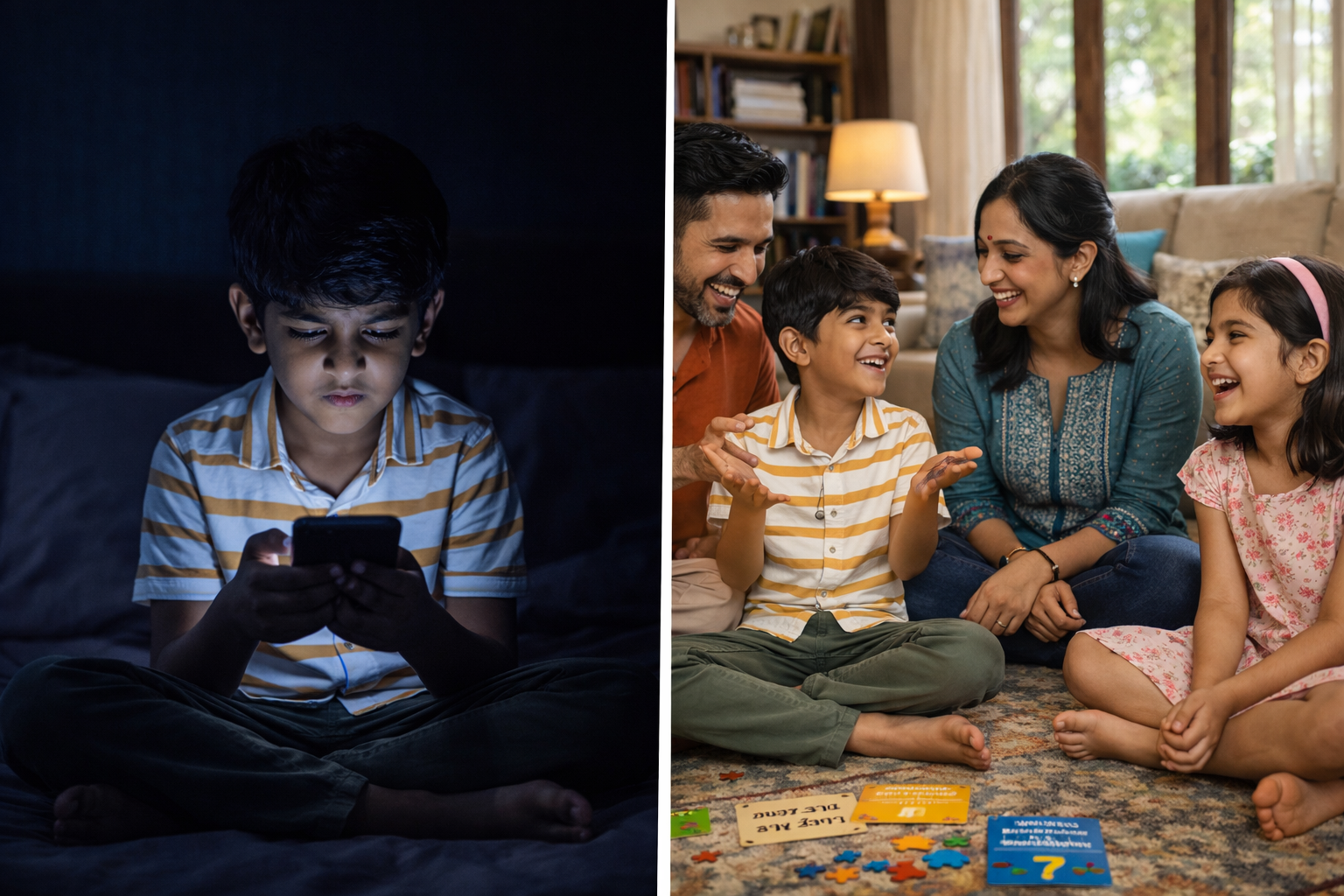
Most parents today are not worried when their child spends hours on a mobile phone or tablet. In fact, many see it as normal or even necessary. But what if this daily habit is quietly rewiring your child’s brain in ways that affect focus, behavior, and long-term development? The reality is that excessive screen exposure in children is now being compared to addictive patterns seen in substance dependency.
The term “digital heroin” may sound extreme, but it reflects a growing concern among psychologists and educators. Children are becoming dependent on instant stimulation, making it harder for them to engage in slow, meaningful learning. This is not just about screen time—it is about how screens are shaping attention span, emotional control, and thinking ability.
Why This Matters:
- Screen addiction affects brain development in early years
- It reduces attention span and learning ability
- Behavioral issues are increasing among children
- Parents often fail to recognize early warning signs
- Early intervention can reverse the impact
What is Screen Addiction and Why It is Dangerous
Screen addiction is not simply about using devices for long hours. It is a behavioral dependency where children feel restless, irritated, or anxious without access to screens. Unlike traditional habits, digital content is designed to keep users engaged through constant stimulation, rewards, and fast-paced visuals.
For young children, whose brains are still developing, this overstimulation can disrupt natural learning patterns. Instead of exploring, thinking, and imagining, they become passive consumers of content. Over time, this weakens their ability to focus, solve problems, and regulate emotions.
Key Risks:
- Reduced attention span
- Delayed language and cognitive development
- Increased irritability and mood swings
- Poor social interaction skills
- Dependency on instant gratification
Sign 1: Your Child Cannot Stay Focused Without a Screen
One of the earliest signs of screen addiction is a noticeable drop in attention span. Children who are used to fast-moving digital content often struggle to focus on slower activities like reading, writing, or even playing with physical objects. They may quickly lose interest and seek stimulation from screens again.
This happens because screens train the brain to expect constant novelty. Real-world activities, which require patience and effort, start to feel “boring” in comparison. Over time, this impacts academic performance and learning ability.
What You May Notice:
- Difficulty concentrating on studies
- Constant switching between activities
- Lack of interest in books or puzzles
- Easily distracted behavior
- Need for continuous stimulation
Sign 2: Frequent Tantrums When Screen Time is Reduced
If your child becomes angry, aggressive, or emotionally unstable when you try to limit screen time, it is a strong indicator of dependency. These reactions are similar to withdrawal symptoms seen in addictive behaviors.
Children may cry, shout, or refuse to cooperate when devices are taken away. This is not just stubbornness—it is a sign that their brain has become reliant on digital stimulation for emotional regulation.
Behavioral Indicators:
- Sudden anger when device is removed
- Emotional outbursts without clear reason
- Resistance to non-screen activities
- Difficulty calming down
- Increased irritability
Sign 3: Loss of Interest in Real-World Activities
Children naturally enjoy exploring their environment, playing with objects, and interacting with others. When screen addiction develops, this natural curiosity starts to decline. Activities that once excited them begin to feel less appealing.
This shift is dangerous because real-world experiences are essential for developing motor skills, creativity, and social intelligence. Without them, overall development slows down.
Warning Signs:
- Avoidance of outdoor play
- Lack of interest in toys or games
- Reduced interaction with family members
- Preference for screens over social activities
- Decreased creativity
Sign 4: Sleep Disruption and Irregular Routine
Excessive screen use, especially before bedtime, can disrupt sleep patterns. The blue light emitted from screens affects melatonin production, making it harder for children to fall asleep. Over time, this leads to irregular sleep cycles and reduced rest quality.
Sleep is critical for brain development. When it is compromised, children may show signs of fatigue, poor concentration, and mood instability.
Sleep-Related Issues:
- Difficulty falling asleep
- Irregular sleeping schedule
- Reduced sleep duration
- Morning fatigue
- Daytime irritability
Sign 5: Dependence on Screens for Entertainment and Comfort
When children start relying on screens not just for entertainment but also for comfort, it becomes a serious concern. They may turn to devices whenever they feel bored, upset, or even slightly uncomfortable.
This prevents them from developing internal coping mechanisms and problem-solving skills. Instead of learning how to manage emotions, they escape into digital environments.
Dependency Patterns:
- Screens used to calm down
- No independent play ability
- Boredom intolerance
- Constant demand for devices
- Emotional reliance on digital content
Why Simply “Reducing Screen Time” Does Not Work
Many parents try to solve this problem by setting strict limits or banning screens altogether. While this may seem logical, it often leads to resistance and conflict. The core issue is not just screen usage—it is the lack of meaningful alternatives.
When screens are removed without replacing them with engaging activities, children feel deprived rather than redirected. This makes the problem worse instead of solving it.
Common Mistakes:
- Sudden screen bans without alternatives
- Lack of structured activities
- Inconsistent rules
- Using screens as rewards
- Ignoring underlying behavioral needs
The Real Solution: Replace, Not Remove
The most effective way to reduce screen addiction is not by removing screens but by replacing them with equally engaging and more beneficial alternatives. Children need stimulation, interaction, and challenge—these needs must be fulfilled in a healthier way.
Structured, hands-on activities provide this balance. They keep children engaged while also developing cognitive and emotional skills. When children find real-world activities enjoyable, their dependence on screens naturally decreases.
What Works Better:
- Activity-based learning instead of passive watching
- Hands-on engagement instead of digital interaction
- Problem-solving tasks instead of instant entertainment
- Physical play instead of screen-based stimulation
- Guided activities instead of random content consumption
How Structured Learning Tools Act as a Healthy Alternative
Structured hands-on learning tools serve as a powerful replacement for screens because they combine engagement with development. They are designed to capture a child’s attention while building essential skills like logic, focus, and creativity.
Unlike toys that entertain or apps that distract, these tools provide purposeful engagement. They gradually train the brain to enjoy slower, deeper forms of learning.
Benefits of Structured Alternatives:
- Improves attention span
- Reduces screen dependency naturally
- Builds cognitive and problem-solving skills
- Encourages independent play
- Creates a balanced learning environment
What Smart Parents Are Doing to Break Screen Dependency
Parents who have successfully reduced screen addiction in their children follow a different approach. Instead of fighting screens, they create an environment where screens are no longer the most attractive option. They introduce structured activities that compete with digital stimulation.
This approach requires consistency, patience, and the right tools. Over time, children begin to shift their interest from passive consumption to active engagement.
Proven Strategies:
- Create a daily routine with activity slots
- Introduce engaging hands-on learning tools
- Reduce screen time gradually, not suddenly
- Participate in activities with your child
- Reinforce positive behavior consistently
Conclusion: The Earlier You Act, The Easier It Is
Screen addiction does not develop overnight, and it cannot be solved instantly. However, early intervention makes a significant difference. The longer a child remains dependent on screens, the harder it becomes to shift their behavior.
NEP 2020 and modern research both point in the same direction—children need active, play-based, real-world learning experiences. By replacing screens with structured engagement, parents can not only reduce dependency but also improve overall development.
Immediate Action Steps:
- Identify early signs of screen dependency
- Start reducing passive screen exposure
- Introduce structured, engaging alternatives
- Focus on building attention and thinking skills
- Create a balanced daily routine