
Introduction: The Silent Addiction Growing Inside Every Home Most parents today are not worried when their child spends hours on a mobile phone or tablet. In fact, many see it

Introduction: When Living Rooms Became Silent Screens
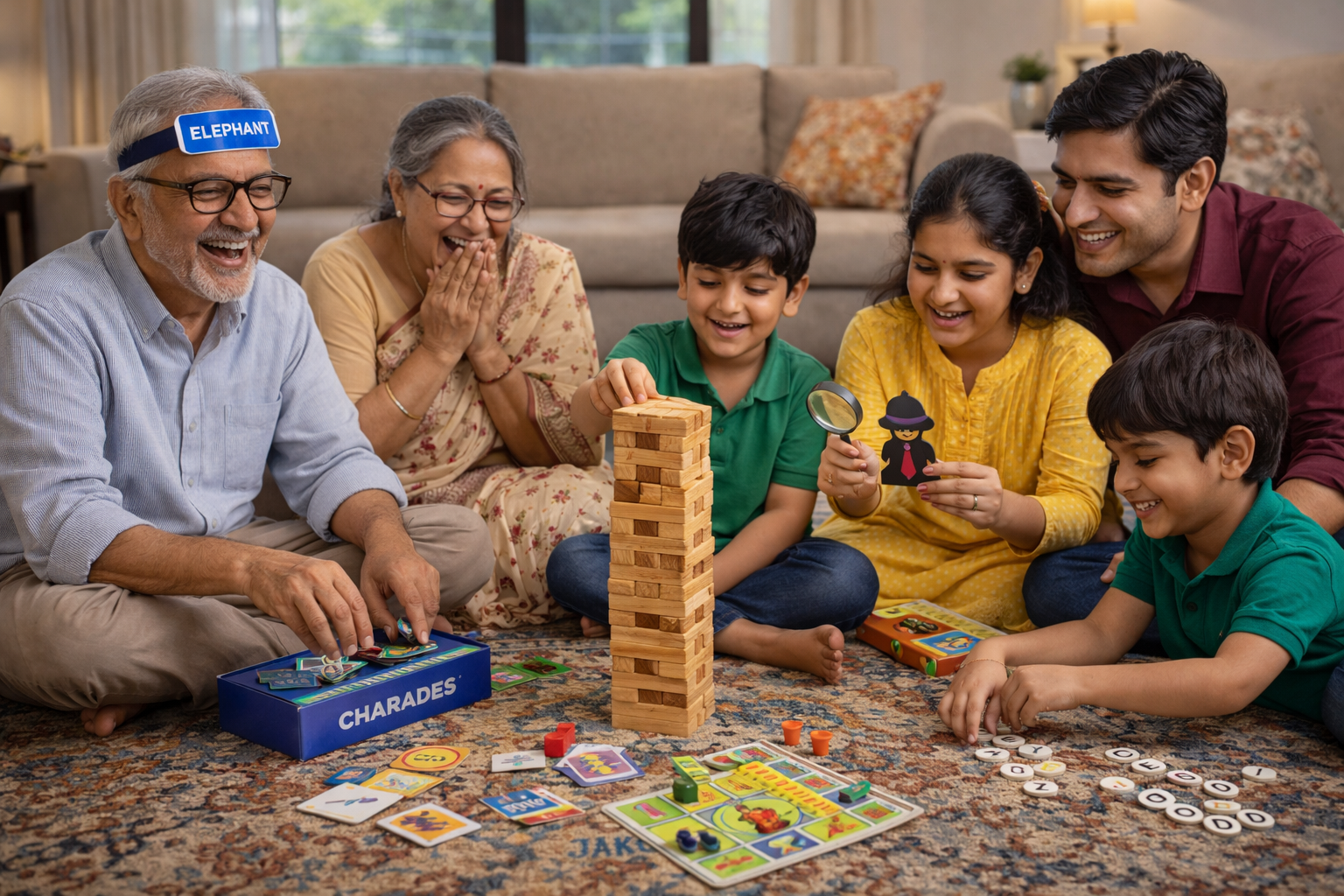
Walk into most homes today, and the living room no longer feels like a space for connection. Instead of conversations, laughter, or shared activities, you often find individuals sitting together but engaged separately—each person focused on their own screen. What was once the heart of family interaction has quietly turned into a digital zone.
This shift has reduced not just communication, but also emotional bonding within families. The problem is not lack of time, but lack of shared experiences. Reclaiming the living room does not require drastic changes. It starts with introducing simple, engaging activities that bring everyone together without screens.
Why This Matters:
- Family interaction is decreasing despite physical proximity
- Screen dependency is replacing shared experiences
- Children are missing out on real-world engagement
- Emotional bonding within families is weakening
- Small changes can restore meaningful connections
Why Traditional Game Nights No Longer Work
When families think of game night, they often fall back on the same options like Ludo or basic board games. While these can be enjoyable, they quickly become repetitive and lose excitement. As a result, participation drops, and screens take over again.
The challenge is not the idea of game night, but the lack of variety and engagement. Modern families need activities that are dynamic, interactive, and suitable for all age groups. Without this, game night becomes predictable and fails to compete with digital entertainment.
Common Problems:
- Repetitive gameplay
- Limited engagement across age groups
- Lack of challenge or creativity
- Quick loss of interest
- Inability to compete with screens
What Makes a Great Zero-Screen Game Night
A successful game night is not about the number of games but about the quality of interaction. The best activities are those that encourage participation, thinking, and collaboration. They should be simple enough for everyone to understand, yet engaging enough to hold attention.
The goal is to create an environment where people look forward to spending time together. This requires choosing activities that balance fun with meaningful engagement.
Key Elements:
- Easy to understand and start
- Engaging for all age groups
- Encourages interaction and teamwork
- Offers variety and challenge
- Creates memorable experiences
Idea 1: Logic Puzzle Challenge Night
Instead of traditional games, introduce a puzzle-based challenge where family members solve problems individually or in teams. This creates a sense of competition while also encouraging thinking and collaboration. Unlike board games, puzzles offer variety and can be adjusted based on difficulty.
This activity keeps everyone mentally engaged and reduces passive participation. It also creates excitement as participants work toward solving a challenge.
How to Play:
- Divide into teams or play individually
- Set a time limit for solving puzzles
- Increase difficulty in each round
- Reward creative solutions
- Rotate roles to keep it dynamic
Idea 2: Story Building Game
Storytelling is a powerful way to engage both children and adults. In this game, each person adds a line or twist to a story, creating something unexpected and often humorous. This encourages creativity, listening, and imagination.
It also allows grandparents and children to participate equally, making it ideal for multi-generational families. The unpredictability keeps everyone involved.
How to Play:
- One person starts the story
- Each participant adds a new element
- Introduce random themes or constraints
- Encourage creativity over correctness
- End with a group conclusion
Idea 3: Memory and Observation Games
Memory-based games are simple yet highly engaging. They challenge attention, recall, and observation skills. These activities can be customized easily and do not require any special equipment.
They are particularly effective because they create quick wins while still requiring focus. This keeps participants motivated and involved.
How to Play:
- Show objects briefly and hide them
- Ask participants to recall details
- Increase complexity gradually
- Introduce variations to keep it fresh
- Track scores for added excitement
Idea 4: Hands-On Building Challenges
Building challenges involve creating something using available materials within a time limit. This could be structures, patterns, or problem-solving tasks. These activities engage both the mind and hands, making them highly effective.
They encourage teamwork, creativity, and practical thinking. Participants not only compete but also collaborate, making the experience more meaningful.
How to Play:
- Provide simple materials or kits
- Set a clear challenge or goal
- Limit time for completion
- Evaluate based on creativity and function
- Encourage teamwork
Idea 5: Family Quiz with a Twist
A quiz night can become much more engaging when it includes interactive elements. Instead of standard questions, include puzzles, riddles, and activity-based challenges. This keeps the format dynamic and interesting.
It also allows everyone to contribute based on their strengths, making participation more inclusive.
How to Play:
- Mix trivia with puzzles and riddles
- Include physical or activity-based tasks
- Form teams for collaboration
- Keep rounds short and varied
- Reward creativity and effort
Why These Activities Work Better Than Screens
Screens offer instant gratification but limit real interaction. The activities mentioned above require participation, thinking, and communication. This creates a deeper level of engagement that screens cannot provide.
When families experience this kind of interaction regularly, the appeal of screens naturally reduces. The focus shifts from passive consumption to active involvement.
Key Advantages:
- Active participation vs passive viewing
- Real interaction vs digital isolation
- Skill development vs entertainment
- Long-term engagement vs short-term distraction
- Emotional bonding vs individual consumption
The Role of Structured Game Kits in Simplifying Game Night
While ideas are helpful, many families struggle with consistency because planning activities every time can be difficult. Structured game kits solve this problem by providing ready-to-use, engaging activities that require minimal setup.
These kits ensure variety, maintain interest, and make it easier to organize regular game nights. They act as a reliable solution for families looking to reduce screen time.
Benefits of Using Kits:
- Ready-to-use activities
- Consistent engagement
- Suitable for all age groups
- Reduced planning effort
- Long-term usability
What Smart Families Are Doing Differently
Families who successfully reduce screen dependency do not rely on restrictions alone. Instead, they create attractive alternatives that naturally draw participation. They make game night a regular part of their routine rather than an occasional activity.
This consistency builds habits and strengthens relationships over time.
Practical Strategies:
- Schedule weekly game nights
- Rotate activities to maintain interest
- Involve all family members
- Keep sessions simple and engaging
- Focus on interaction, not perfection
Frequently Asked Questions About Screen-Free Game Nights
How can I start a game night if my family prefers screens?
Start with simple, engaging activities that require minimal effort. Gradually introduce variety and make it enjoyable rather than forced, so participation increases naturally.
How often should we organize game nights?
Once or twice a week is enough to build consistency. Regular sessions are more effective than occasional long events.
What if different age groups have different interests?
Choose activities that are flexible and adaptable. Games involving creativity, puzzles, or teamwork usually work well across age groups.
Do these activities really reduce screen time?
Yes, when engaging alternatives are available, screen dependency reduces naturally. The focus shifts to shared experiences.
Do I need special materials for these games?
Not necessarily, but structured kits can make the process easier. They provide ready-made activities that ensure consistent engagement.
Conclusion: Bring Life Back Into Your Living Room
The living room was never meant to be a place where everyone sits together but remains disconnected. It was designed for interaction, laughter, and shared moments. Reclaiming it does not require major changes—just the right activities and a consistent approach.
By introducing zero-screen game nights, families can rebuild connections, improve communication, and create lasting memories. The goal is not just to reduce screen time, but to replace it with something more meaningful.
What You Should Do Next:
- Choose one activity and start this week
- Reduce passive screen time gradually
- Introduce structured, engaging alternatives
- Involve every family member
- Make game night a regular habit